What Is Professional Development? A Complete 2026 Guide for Educators and Trainers

After spending years developing professional development programs for educators across Australia—from individual VET trainers to entire TAFE teaching teams—I’ve learned that the question “what is professional development?” rarely gets the honest answer it deserves.
Here’s what I’ve observed: Professional development has fundamentally transformed over the last decade. When I first started creating PD resources at Pop Education, most educators expected a yearly workshop and a certificate. Today, they’re navigating digital learning platforms, evolving compliance frameworks, accessibility standards, and teaching complexities that simply didn’t exist five years ago.
The educators I work with, whether in VET, higher education, schools, or corporate training—face unprecedented demands. They’re mastering digital tools while maintaining teaching quality, designing engaging online content while meeting strict compliance, and supporting increasingly diverse learners while managing heavier workloads than ever before.
This reality has shaped how we approach professional development at Pop Education. It’s no longer about occasional workshops and box-ticking. It’s about creating ongoing learning experiences that fits into educators’ lives and address the real challenges they face daily.
This guide draws on what I’ve learned working directly with hundreds of educators and training organisations. I’ll share what professional development truly means in 2026, why it matters more than credentials suggest, what actually works (and what doesn’t), and how we’ve designed our approach to serve time-poor professionals who need practical solutions, not theory.
What Is Professional Development? Beyond the Textbook Definition
Professional development refers to the ongoing process of learning and growth that helps educators, trainers and organisational teams improve their skills, stay compliant with regulations, and deliver better outcomes for learners. That’s the textbook answer, but here’s what I’ve seen it mean in practice.
When we started developing Pop bites and TAE bites, I interviewed dozens of educators about their PD experiences. The consistent theme? Traditional definitions miss the mark. Professional development isn’t just structured learning—it’s everything educators do to stay effective as their context constantly shifts.
From my experience creating resources for over 20 TAFE providers and 30+ government projects, I’ve seen professional development evolve from:
What it used to be:
- Attending occasional face-to-face workshops
- Completing mandatory certification renewals
- Participating in formal professional networks
- Pursuing advanced degrees when career progression demanded it
What it actually includes now:
- Self-paced microlearning that educators complete between classes or during planning periods
- Live workshops and webinars where trainers can ask questions about their specific compliance situations
- Digital skills training because suddenly everyone needs to know LMS platforms, authoring tools and online facilitation
- Assessment and compliance upskilling particularly for VET trainers navigating ASQA expectations
- AI literacy as artificial intelligence increasingly appears in classrooms and assessment contexts
- Accessible learning design meeting WCAG standards and supporting genuinely diverse learners
- Custom capability programs when organisations need their entire team aligned on new approaches
The fundamental shift I’ve witnessed: professional development is no longer about “getting qualified” once. It’s about continuous adaptation—updating teaching methods, refining assessment practices, building digital capabilities, and responding to what learners actually need rather than what worked five years ago.
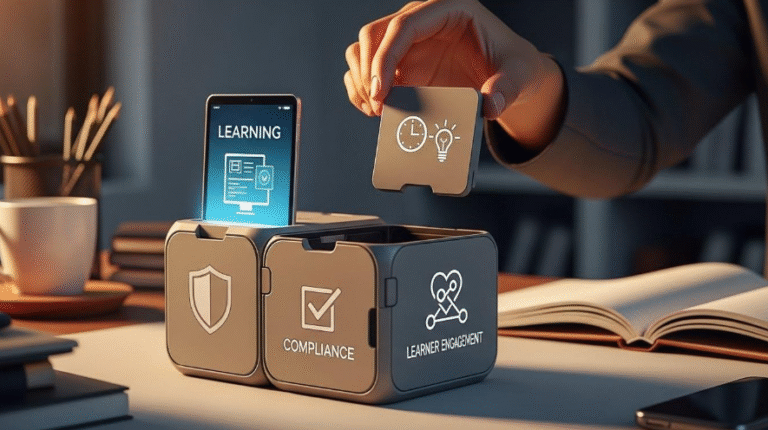
Why Professional Development Matters More Than Ever in 2026
I’ve worked with educators across VET, higher education, schools, corporate training and community education. Regardless of context, professional development has shifted from “nice to have” to “essential for survival”. Here’s why, based on what I see happening:
Digital Learning Has Become the Baseline Expectation
The pandemic accelerated what we thought would be a gradual ten-year transition—it happened in months instead. I remember frantically helping RTOs convert face-to-face courses to online delivery in 2020. Many trainers had never facilitated a webinar, designed digital content, or assessed students remotely.
What I’ve learned helping educators through this transition: subject expertise alone isn’t enough anymore. Even brilliant teachers who command physical classrooms can struggle online without specific skills:
- Designing for LMS environments that actually engage rather than just deliver content
- Creating online experiences that maintain attention and motivation
- Building genuinely interactive learning, not just PDF uploads with a quiz
- Using digital tools confidently while troubleshooting when (not if) technology fails
- Supporting learners experiencing technical difficulties without derailing the session
Our professional development programs bridge this gap. The educators who’ve thrived are those who invested in building digital capability rather than hoping things would “go back to normal”. By 2026, it’s clear: digital isn’t temporary—it’s permanent.
Compliance Complexity Keeps Intensifying (Trust Me on This One)
Having worked with ex-auditors on our TAE40122 resources, I’ve developed deep appreciation for VET compliance complexity. ASQA and state regulators don’t just want trainers who can teach. They expect sophisticated understanding of assessment design, validation, industry currency, and evidence requirements.
Through our TAE bites program, I’ve seen firsthand what VET trainers struggle with most:
- Assessment design that genuinely measures competency rather than just knowledge
- Validation processes that ensure consistency without becoming bureaucratic nightmares
- Industry engagement that maintains genuine currency, not just token gestures
- Evidence gathering meeting sufficiency, validity, authenticity, and currency requirements
Here’s what I’ve learned: compliance knowledge isn’t intuitive. Even experienced trainers with 20+ years in industry need structured VET professional development to understand these regulatory expectations. The trainers who approach audits confidently are those who’ve invested in understanding what compliance requires.
Learner Expectations Have Fundamentally Changed
When I design professional development content, I’m acutely aware that today’s educators face learners with expectations shaped by Netflix, Spotify and TikTok. I’m not saying education should become entertainment, but the contrast between polished consumer experiences and clunky educational platforms creates real disengagement.
Whether apprentices, university students, or corporate employees, in 2026 modern learners expect:
- Engaging content using varied media and genuine interactivity
- Flexibility to learn when and where suits their circumstances
- Mobile access because many study primarily on phones or tablets
- Meaningful interaction making them active participants
- Support for diverse needs including LLN requirements and reasonable adjustments
Our Pop bites program specifically addresses this through modules on interactive content creation, accessibility design, and engagement strategies. Teacher professional development that ignores these expectations leaves educators frustrated when learners disengage.
Time Poverty Is Educators’ Biggest Barrier
Here’s something I’ve learned creating hundreds of hours of professional development: the greatest obstacle isn’t educators’ unwillingness—it’s genuine lack of time. Every trainer I work with faces crushing workloads: teaching, marking, planning, administration, compliance documentation, meetings and pastoral care.
This reality shaped our entire approach. When we launched Pop bites and TAE bites as bite-sized, self-paced courses, adoption exceeded our expectations. Why? Because educators could realistically complete modules between classes, during planning periods, or at home after kids went to bed—rather than needing full days away from work.
Professional development that ignores time poverty fails before it starts. This is why we’ve moved away from only offering full-day workshops toward creating flexible options that fit real lives.
The Different Types of Professional Development That Actually Work
After years developing and delivering various PD formats, I can tell you: format matters as much as content. What works brilliantly for one educator might completely fail for another. Here’s what I’ve learned about different approaches:
Live Workshops and Webinars: When Real-Time Matters
Best for: Teams building shared understanding or topics requiring immediate Q&A and collaborative problem-solving.
I still deliver live workshops regularly—they haven’t become obsolete. But I’ve learned what makes them valuable versus what wastes everyone’s time. Effective workshops provide:
- Immediate question-answering about specific compliance situations or technical challenges
- Collaborative problem-solving where educators share contexts and learn from peers
- Hands-on practice with new tools or approaches while support is available
- Team alignment when organisations need consistent understanding across staff
At Pop Education, we deliver workshops on topics where live interaction genuinely adds value:
Assessment and compliance:
- Assessment design and validation (where trainers need to discuss their specific contexts)
- Foundation skills and LLN support strategies
- Navigating compliance requirements for your actual scope
Digital delivery:
- Online facilitation techniques (practicing in real-time with feedback)
- Creating interactive content using H5P or similar tools
- LMS platform skills with live troubleshooting
Learning design:
- Curriculum design workshops where teams map together
- Accessible learning design with immediate accessibility testing
- Engagement strategies with peer feedback
These sessions can be face-to-face for local teams, live online for dispersed participants, or fully customised for specific organisational needs and challenges.
Bite-Sized, Self-Paced Learning: The Format That Changed Everything
This represents the biggest shift I’ve seen in professional development delivery. When we launched Pop bites and TAE bites, I honestly wasn’t sure if educators would engage with short, self-paced modules. The response proved me wrong and taught me valuable lessons.
Why bite-sized works based on actual usage data:
- Educators complete modules in genuine downtime—planning periods, commutes, evenings
- They can pause when interrupted (which happens constantly in education)
- They revisit specific sections when implementing new practices
- Certificate download is instant—no waiting for processing
Pop bites (for educators across all sectors) covers skills I consistently see educators need:
- AI for educators – Because everyone’s asking how AI impacts teaching and assessment in 2026
- Digital tools for teaching – Practical guides beyond generic “intro to technology”
- Accessibility and WCAG – Creating inclusive content, not just compliant
- Interactive content creation – Using H5P and similar tools effectively
- LMS skills – Getting beyond basic Moodle or Canvas use
- Microlearning design – Creating effective bite-sized learning (meta, I know)
TAE bites (specifically for VET professionals) addresses challenges VET trainers consistently face:
- Assessment development – Creating tools that work
- Facilitation skills – Engaging diverse adult learners authentically
- Validation processes – Making validation manageable, not overwhelming
- Foundation skills – Practical LLN support strategies
- Online assessment – Maintaining integrity without becoming punitive
- VET compliance essentials – Understanding Standards for RTOs in plain language
The self-paced format works because it respects educators’ reality: unpredictable schedules, competing demands, and need for just-in-time learning.
Custom Organisational Programs: When Standard Approaches Don’t Fit
Some situations require bespoke professional development—I’ve learned this through experience rather than preference. Organisations contact us during:
- Digital transformation requiring everyone upskilled simultaneously
- New course development needing specialised instructional design capability
- LMS migration demanding intensive platform training before launch
- Audit preparation requiring targeted compliance upskilling across teams
- Capability building developing consistent standards and practices organisation-wide
Through custom programs for RTOs, TAFEs, and training teams, I’ve learned that one-size-fits-all rarely fits anyone well. Effective custom PD requires understanding the specific context, challenges, existing capabilities, and desired outcomes—then designing targeted solutions rather than repurposing generic content.
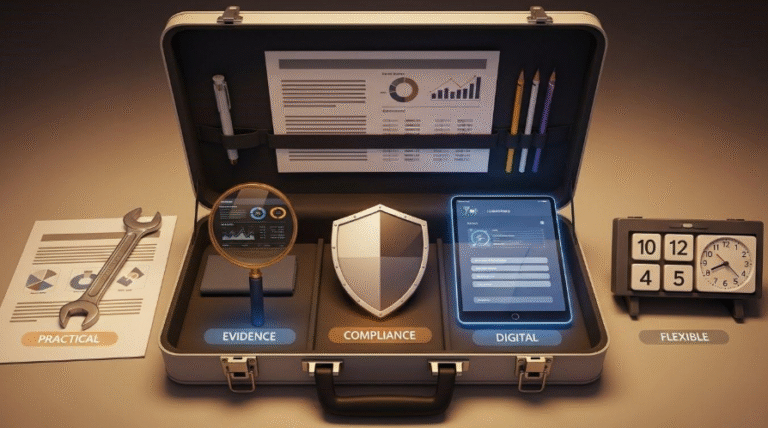
What Makes Professional Development Actually Effective
I’ve seen enough mediocre professional development to recognize it immediately. You’ve probably experienced it too—sitting through sessions thinking “this is such a waste of time”. After years refining our approach, here’s what I’ve learned distinguishes valuable PD from time-wasting compliance exercises:
- Immediately Practical and Applicable
If educators can’t use it in their very next session, it’s probably not useful enough. I design every module with this test: could someone implement this within 48 hours without extensive additional research or resources?
Abstract theory disconnected from practice frustrates educators who face daily challenges requiring immediate solutions. Effective professional development provides concrete strategies, ready-to-use resources, and clear implementation guidance.
- Grounded in Evidence-Based Pedagogy
Professional development should model the teaching it advocates. When I design learning experiences, I’m conscious that educators notice whether PD practices align with PD recommendations. If I’m advocating interactive engagement, my content better be genuinely interactive—not just PowerPoint slides with “interaction” bullet points.
Drawing on research about adult learning, online effectiveness, diverse learner support, and authentic assessment builds credibility. Educators spot shallow content immediately.
- Focused on Digital-Age Competencies
The skills educators need have fundamentally shifted. I’ve stopped developing PD that ignores digital realities—it simply doesn’t serve anyone. Modern teacher professional development must address:
- LMS integration and optimisation
- Online facilitation that engages
- Digital content creation beyond uploading documents
- Accessibility standards implementation
- Educational technology fluency
- Interactivity design that serves learning goals
Teaching in 2026 requires digital capability alongside pedagogical expertise. PD ignoring this reality fails educators.
- Compliance-Aware Where It Matters
Especially in VET professional development, compliance can’t be optional. Working with ex-auditors has taught me that compliance doesn’t need to feel like legal documentation. Good PD makes requirements comprehensible and achievable.
When developing TAE bites, we focused on translating Standards for RTOs into practical action. Trainers don’t need to memorise regulations—they need to understand what compliance looks like in their daily practice.
- Genuinely Flexible in Delivery
“Flexible” has become meaningless marketing speak unless backed by actual options. Based on educator feedback, flexibility means:
- Live workshops when collaborative learning adds value
- Online webinars for convenient remote access
- Self-paced courses for maximum schedule compatibility
- Blended approaches combining benefits of multiple formats
- Accessible design with captions, transcripts and clear navigation
Our integrated approach—workshops, Pop bites, and TAE bites—emerged from recognising that different educators need different approaches depending on learning preferences, schedules and specific goals.
Choosing Professional Development That Actually Helps
After years in this field, I’ve developed strong opinions about what separates quality professional development from mediocre offerings. When investing time and resources, ask these questions:
Does the provider combine multiple areas of expertise? Look for pedagogical knowledge, digital capability, compliance understanding, and practical implementation support—not just one dimension.
Do they offer genuinely flexible options? Check for live workshops, online webinars, self-paced courses, and custom programs that let you choose based on actual needs rather than provider convenience.
Are topics relevant to current challenges? Ensure content addresses real issues in 2026: digital delivery, accessibility, engagement, assessment integrity, compliance, AI literacy—not tangential or outdated topics.
Is it immediately applicable? Determine whether you’ll leave with usable strategies and resources rather than theory requiring extensive translation.
Do they understand your sector? VET compliance differs from school teaching differs from higher education differs from corporate L&D. Context matters enormously.
Can they work at multiple scales? Consider whether the provider supports individual learning, team capability building, and organisational transformation—not just one level.
At Pop Education, we’ve deliberately built capabilities across these dimensions because I’ve seen what happens when PD providers specialise too narrowly—they deliver technically proficient content that doesn’t serve educators’ complete needs.
Professional Development as Strategic Investment
Here’s what I’ve learned after developing professional development for hundreds of educators and dozens of organisations: treating PD as a compliance exercise versus strategic investment produces completely different outcomes.
Professional development represents long-term investment in:
- Capability that compounds over time as skills build on skills
- Compliance that prevents expensive regulatory issues
- Innovation that keeps teaching practice contemporary
- Learner success that ultimately determines educational effectiveness
The organisations thriving in 2026 are those embedding professional development into culture rather than treating it as occasional obligation. They recognise continuous learning isn’t optional for education professionals—it’s essential for sustained effectiveness.
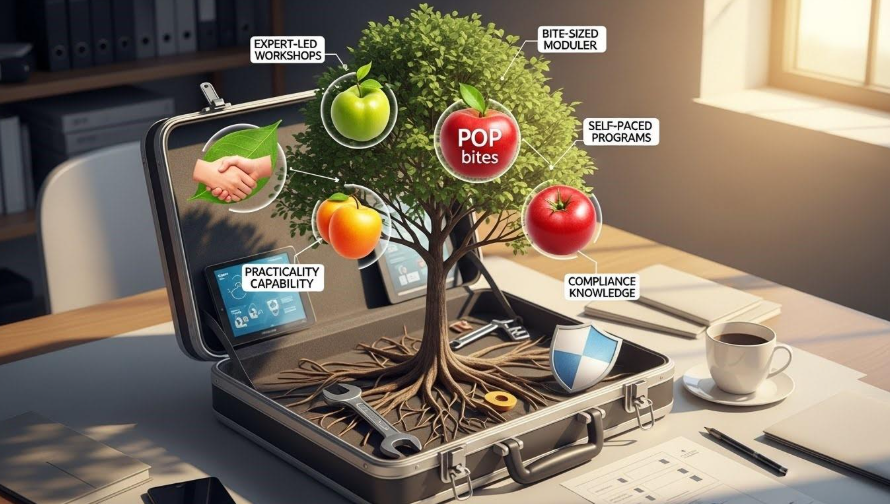
Conclusion: Professional Development That Serves Real Needs
After years creating professional development resources—from individual Pop bites modules to comprehensive organisational programs—I’m convinced that understanding what professional development truly is requires moving beyond textbook definitions to recognise it as continuous, flexible, practical, and essential.
The educators and trainers I work with face unprecedented complexity in 2026: Digital delivery expectations, compliance requirements, diverse learner needs, AI integration challenges, and constant change. Professional development that ignores these realities or offers generic solutions fails before it starts.
At Pop Education, we’ve built our approach around what actually works based on direct experience: expert-led workshops when live interaction matters, self-paced Pop bites and TAE bites for flexible ongoing learning, and custom programs when organisations need tailored solutions. We combine pedagogical expertise, digital capability, compliance knowledge, and genuine flexibility because educators deserve professional development that serves their complete needs—not just checks boxes.
Whether you’re a VET trainer navigating compliance, a teacher transitioning to online delivery, a corporate L&D professional scaling digital learning, or an educational leader building team capability, remember: Professional development isn’t something you do occasionally. It’s something you build into how you work, learn and grow.
Ready to explore professional development that actually fits your needs? Visit popeducation.com.au to see our workshops, Pop bites, and TAE bites, or contact us at contact@popeducation.com.au to discuss custom capability building for your organisation.
Frequently Asked Questions About Professional Development
Q: What is professional development for teachers and educators?
Professional development for teachers and educators is ongoing learning that helps education professionals improve teaching practice, develop new skills, stay current with trends, and meet evolving learner needs. From my experience developing PD for hundreds of educators, it includes workshops, online courses, webinars, self-paced learning, mentoring, and formal qualifications. Modern teacher professional development in 2026 focuses on digital pedagogy, online facilitation, accessible design, engagement strategies, assessment methods, AI literacy, and educational technology—because these are the capabilities educators consistently need but often lack opportunity to develop through initial qualifications. The goal is continuous improvement throughout careers rather than one-time qualification.
Q: What are the different types of professional development available?
Based on the various formats we’ve developed at Pop Education, professional development includes: live face-to-face workshops for collaborative hands-on learning, online webinars providing convenient remote access, self-paced digital courses allowing flexible timing (like our Pop bites and TAE bites), bite-sized microlearning for quick skill building, formal qualifications such as postgraduate certificates, mentoring and coaching for personalised guidance, peer learning communities for shared practice development, conference attendance for networking and awareness, action research for practice-based inquiry, and custom organisational programs tailored to specific institutional needs. Effective PD often combines multiple formats—we’ve found educators engage most when given genuine choice matching their learning preferences and circumstances.
Q: How is VET professional development different from other education sectors?
Having developed extensive resources specifically for VET trainers (our TAE bites program and TAE40122 materials), I can tell you VET professional development has unique characteristics due to regulatory environment and industry focus. VET trainers must maintain Standards for RTOs 2015 compliance, requiring specific knowledge about assessment principles, validation processes, industry currency, and evidence requirements that simply don’t apply in other sectors. VET PD emphasises competency-based assessment design, workplace learning facilitation, RPL processes, foundation skills support, and navigating training packages. Additionally, VET trainers need both pedagogical competence (TAE40122) and current vocational expertise in their industry area—making industry engagement and currency maintenance essential PD components not equally emphasised elsewhere.
Q: Why is online professional development becoming more popular?
After watching online PD adoption accelerate dramatically (particularly with Pop bites and TAE bites), I’ve identified why educators increasingly choose digital formats: flexibility allowing learning at convenient times solves the time-poverty issue most educators face; accessibility means geography doesn’t limit options—rural educators access the same quality PD as metropolitan colleagues; cost-effectiveness eliminates travel expenses; self-pacing lets educators control learning speed, revisiting concepts or moving quickly through familiar material; just-in-time learning addresses immediate needs rather than waiting months for scheduled workshops; digital formats model good online teaching practice through multimedia and interactivity; and certificates are immediately accessible for portfolios and compliance documentation. Based on our completion data, educators who choose self-paced online PD actually complete at higher rates than mandatory workshops—because they’ve opted in when genuinely ready to learn.
Q: How much professional development should educators complete annually?
From working with educators across sectors, I’ve learned required hours vary significantly: many systems expect 20-40 hours annually, though some require more. VET trainers maintaining TAE40122 currency should engage in ongoing PD addressing both teaching/assessment skills and vocational knowledge. Teachers with professional registration must meet specific renewal requirements. However, here’s what I’ve observed: viewing PD purely through compliance lenses misses the point. Effective educators treat professional learning as continuous practice rather than meeting minimum hours. Quality trumps quantity—10 hours of directly relevant, immediately applicable PD delivers more value than 40 hours of marginally useful content. Focus on building capabilities addressing genuine practice needs rather than accumulating hours for compliance. The educators who develop most are those who stop counting hours and start solving problems.