
A training needs analysis is a systematic process used to identify the gap between current performance and required standards, helping organisations determine whether training is the right solution. It aligns workforce capability with business or regulatory goals, supports measurable performance improvement, and ensures training investment is targeted and justified.
In regulated environments such as Australian RTOs, however, training needs analysis is more than a performance tool. It is a compliance safeguard. When conducted properly, it provides the evidence required to justify course design, delivery structure, learner support strategies, and volume of learning decisions during audit.
What Is Training Needs Analysis?
At its core, training needs analysis (TNA) is a structured decision-making process. It evaluates whether a performance issue is caused by a genuine skills gap and whether training will resolve it. Rather than assuming learning is always the answer, TNA examines context, capability, and outcomes before a course is developed or revised.
TNA is typically conducted when launching a new qualification, updating a Training and Assessment Strategy (TAS), responding to industry change, or reviewing course effectiveness. It may involve compliance managers, instructional designers, trainers, or external consultants.In short, training needs analysis identifies the skills required, evaluates current capability, measures the gap, and determines the appropriate response. That response may include training, but not always.
Why Training Needs Analysis Matters in Regulated Environments
Training decisions must be justified with evidence. Course duration, delivery mode, assessment structure, and learner support strategies must align with industry need and the expectations of the training package. A properly documented TNA provides that alignment.
Without a structured TNA, providers risk over-delivery or under-delivery of training. They may enrol unsuitable learners, miscalculate volume of learning, or design assessments that fail to reflect real workplace requirements. During audit, these gaps quickly become findings.
A strong training needs analysis Australia framework strengthens compliance training decisions by demonstrating that the RTO has:
- Identified genuine industry demand
- Understood learner cohort characteristics
- Mapped outcomes to training package requirements
- Justified volume of learning
- Considered Recognition of Prior Learning (RPL) pathways
When documented effectively, TNA becomes protective audit evidence rather than a theoretical exercise.
The Three Types of Training Needs Analysis
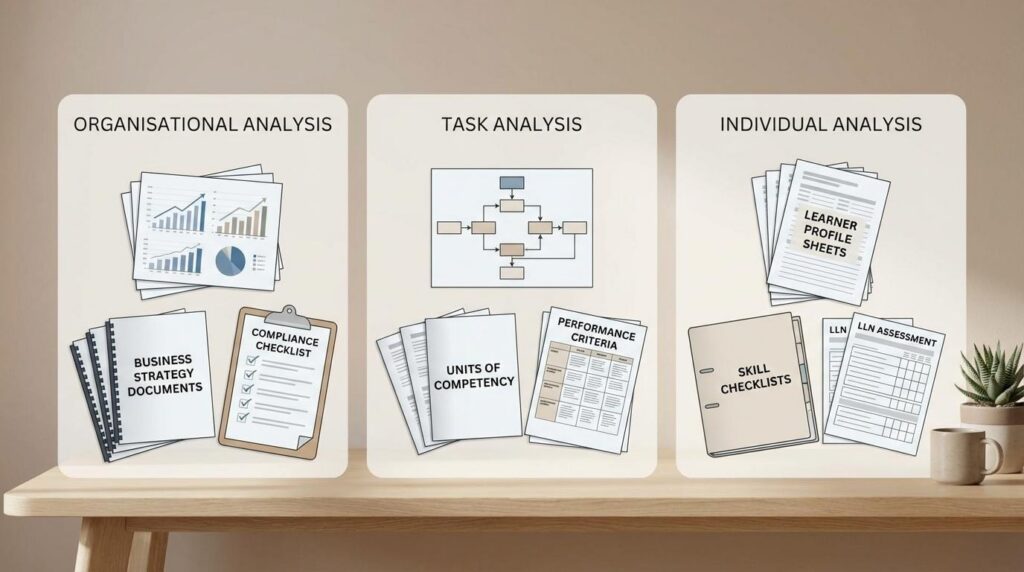
To fully understand the training needs analysis process, it is essential to recognise that the three types of training needs analysis are organisational analysis, task analysis, and individual analysis.
Organisational analysis examines strategic direction and regulatory context. It asks whether training aligns with business goals, licensing requirements, industry demand, and workforce capability needs. For RTOs, this may involve reviewing changes to training packages or responding to emerging skills shortages.
Task analysis focuses on the job itself. It reviews units of competency, performance criteria, and required skills and knowledge evidence. This stage involves competency mapping and ensures the training reflects real workplace outcomes rather than generic content.
Individual analysis evaluates the learner cohort. It considers entry requirements, prior experience, LLN capability, and potential RPL opportunities. In regulated environments, this step is critical to prevent enrolling learners who are unlikely to achieve competency or complete the qualification successfully.
Together, these three types of training needs analysis ensure strategic alignment, job relevance, and learner suitability.
The 5 Key Steps of a Training Needs Analysis
The 5 key steps of training needs analysis include defining objectives, identifying required competencies, assessing current capability, analysing the skills gap, and determining the appropriate solution. When followed systematically, these steps create defensible and evidence-based training decisions.
The process begins with defining organisational or regulatory objectives. This involves clarifying compliance standards, business strategy, industry needs, and any legislative drivers influencing training requirements.
The second step involves identifying required skills and competencies. For RTOs, this means reviewing training package requirements, analysing units of competency, and confirming any licensing or industry obligations. Competency mapping ensures accuracy and alignment.
Next comes assessing current capability. This stage may involve surveys, interviews, workplace observation, performance reviews, or skills audits. LLN testing may also be required. The goal is to collect objective evidence of existing workforce capability.
The fourth step is analysing the skills gap. This is where skills gap analysis occurs — comparing required performance against current performance. Clear documentation is critical here. Audit evidence must show how conclusions were reached.

Finally, the process concludes by determining the appropriate solution. Importantly, training is not always the answer. Sometimes performance issues stem from unclear processes, inadequate supervision, or resource constraints. In other cases, assessment-only pathways or RPL may be more suitable.
Methods and Tools Used in Training Needs Analysis
Effective training needs analysis relies on multiple data sources. Interviews and surveys help gather stakeholder perspectives. Workplace observation provides practical insight into job performance. Document review supports regulatory alignment, while skills matrices and competency mapping tools enable structured comparison against required standards.
What Should a Training Needs Analysis Template Include?
A robust training needs analysis template should document organisational context, describe the learner cohort, identify regulatory drivers, summarise current capability evidence, analyse identified gaps, and outline recommended actions. It should also create a clear audit trail demonstrating how training decisions were reached.
For VET providers, this documentation must support TAS development, volume of learning justification, and industry consultation records.
Training Needs Analysis Example in an RTO Context
Consider an RTO delivering Certificate IV in Leadership and Management to experienced workplace supervisors. Employers report that supervisors demonstrate strong operational skills but lack structured performance management knowledge and formal leadership frameworks.
The training needs analysis identifies a gap between practical experience and documented competency requirements within relevant units. Competency mapping confirms alignment with training package standards.
Because learners already possess significant workplace experience, the TNA justifies a blended delivery model, contextualised assessment tasks, and an integrated RPL pathway. Volume of learning decisions are documented and supported by evidence of prior experience.
This example demonstrates how training needs analysis in RTO settings directly influences TAS development, delivery design, and compliance documentation.
Common Mistakes in Training Needs Analysis

Despite its importance, training needs analysis is often treated as a formality. One common mistake is assuming training is always the solution to performance issues. Without proper analysis, organisations may invest in learning that fails to address root causes.
Another frequent error is inadequate documentation. Even when analysis is conducted, failure to record evidence creates audit vulnerability. Similarly, ignoring learner cohort differences or copying TAS documents without genuine analysis undermines defensibility.
Effective TNA requires rigour, documentation, and alignment with training package requirements.
Is Training Needs Analysis Mandatory?
Training needs analysis is implicitly required under the Standards for RTOs through expectations of evidence-based training design, industry consultation, and justified volume of learning decisions.
During audit, providers must demonstrate how course structures were determined. A documented training needs analysis provides the rationale behind those decisions and strengthens compliance positioning.
FAQs About Training Needs Analysis
What are the 5 steps of training needs analysis?
The 5 steps of training needs analysis include defining objectives, identifying required skills, assessing current capability, analysing the skills gap, and determining the appropriate solution.
What are the three types of training needs analysis?
The three types of training needs analysis are organisational analysis, task analysis, and individual analysis. Each examines a different dimension of capability and alignment.
How often should training needs analysis be conducted?
Training needs analysis should be conducted when developing new qualifications, updating a TAS, responding to regulatory changes, or preparing for audit. It should also be reviewed periodically to ensure continued relevance.
What tools are used in training needs analysis?
Common tools include interviews, surveys, observation, skills audits, LLN testing, and competency mapping frameworks.
Is a training needs analysis required for audit?
While not always explicitly stated, auditors expect evidence that training design decisions are justified. A documented TNA provides that evidence.
How Pop Education Supports Effective Training Needs Analysis
At Pop Education, we approach training needs analysis as both a strategic and compliance-critical process. Our work integrates instructional design expertise with regulatory awareness to ensure every training decision is defensible.
We support RTOs with customised TNA frameworks, Training & Assessment Strategy development, competency mapping, audit preparation, and regulatory-aligned documentation. Our focus is not simply on identifying skills gaps, but on building sustainable, compliant training systems.
If you’d like to discuss how a structured training needs analysis can strengthen your organisation’s training design and compliance positioning, get in touch with the team at Pop Education.