Educational Content Development: A Practical Guide for Instructional Designers
Creating effective learning materials has become one of the most important skills in today’s training landscape—especially for instructional designers, digital learning developers, and educators working in adult learning and vocational education. Modern learners expect more than text-heavy slides and long videos. They want training that is practical, relevant, and designed with purpose. This is where educational content development becomes essential.
Educational content development is the structured process of analysing learning needs, planning content, designing interactive experiences, and ensuring the final product leads to real learning outcomes. It sits at the heart of successful education design, whether the goal is professional development, RTO training, or workplace skills programs. In this guide, we’ll walk through a clear, repeatable process that can help you improve the quality and impact of the training you develop.
Understanding Educational Content Development
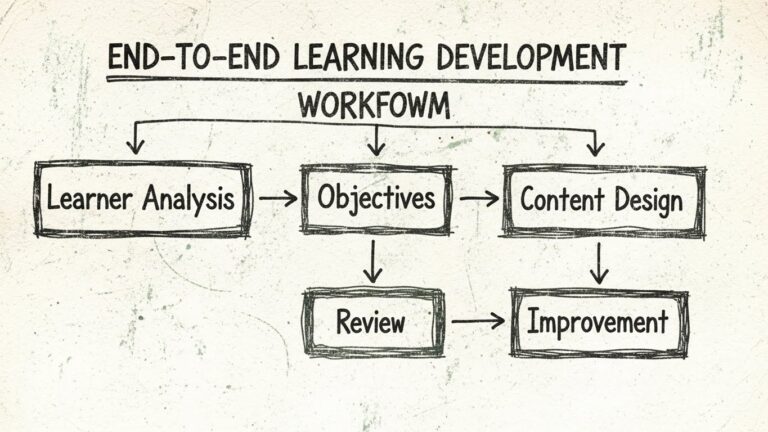
Educational content development involves far more than writing lessons or assembling information. It is a full-cycle process that combines learner analysis, instructional strategy, learning design, content creation, review, and refinement. At its core, it focuses on building materials that align with learning outcomes and support learners through clear explanations, structured guidance, and opportunities to practice.
This approach is especially important in adult learning and vocational courses, where learners often bring existing knowledge but need practical, real-world application. Training in the VET sector, for example, must be both compliant and engaging. RTOs must meet strict standards, while still providing learners with training that feels modern, interactive, and relevant. Effective educational content development bridges these needs by offering a strong foundation for both quality and engagement.
Start With the Learner
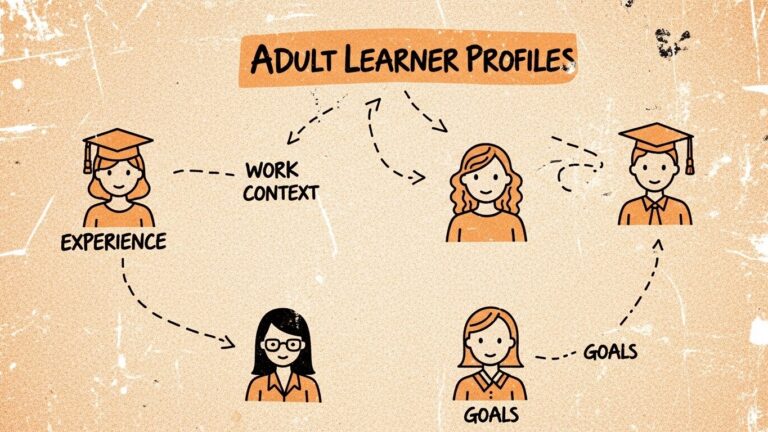
Every strong piece of learning content begins with understanding the learner. This includes their background, skill level, digital confidence, and the context in which they will apply the knowledge. Adult learners, in particular, are motivated by relevance. They want to know why they’re learning something and how it will help them in real life.
Analysing your learners helps shape your writing style, examples, activities, and the level of complexity. For instance, someone completing a compliance course on an LMS may need clear, step-by-step guidance with practical examples. Someone completing a professional development program may benefit more from scenario-based learning and reflective activities. When you understand your learner’s needs, preferences, and challenges, you can make design decisions that keep them engaged and confident.
Define Measurable Learning Objectives
Learning objectives act as the blueprint for the entire educational content development process. Clear objectives help you determine the scope of your content, structure your explanations, and choose appropriate interactive elements.
Strong learning objectives are specific and measurable. They describe what the learner will be able to do after completing the training. Instead of broad statements such as “Understand customer service principles,” a well-written objective might be “Demonstrate effective communication strategies when responding to customer enquiries.”
In vocational education and RTO environments, these objectives must also align with training package requirements. This ensures your content is not only engaging but also compliant, valid, and fit for assessment.
Structure Your Content for Clarity and Simplicity
Once you have clear learning objectives, the next step is organising your content into a clear and logical structure. A well-structured course prevents cognitive overload and helps learners progress smoothly through the material.
A strong structure typically begins with context. Adult learners want to know why the topic matters and how it applies to their work. From there, break content into focused sections, using short paragraphs, meaningful subheadings, and well-placed examples. This keeps the training digestible, whether learners are studying on a desktop or completing modules on a mobile device.
Examples, case studies, and relatable scenarios are especially valuable in vocational courses. They show learners what the skills look like in practice, which improves comprehension and retention. When you incorporate practical examples throughout your content, you help bridge the gap between theory and real-world application.
Use Interactivity to Build Engagement
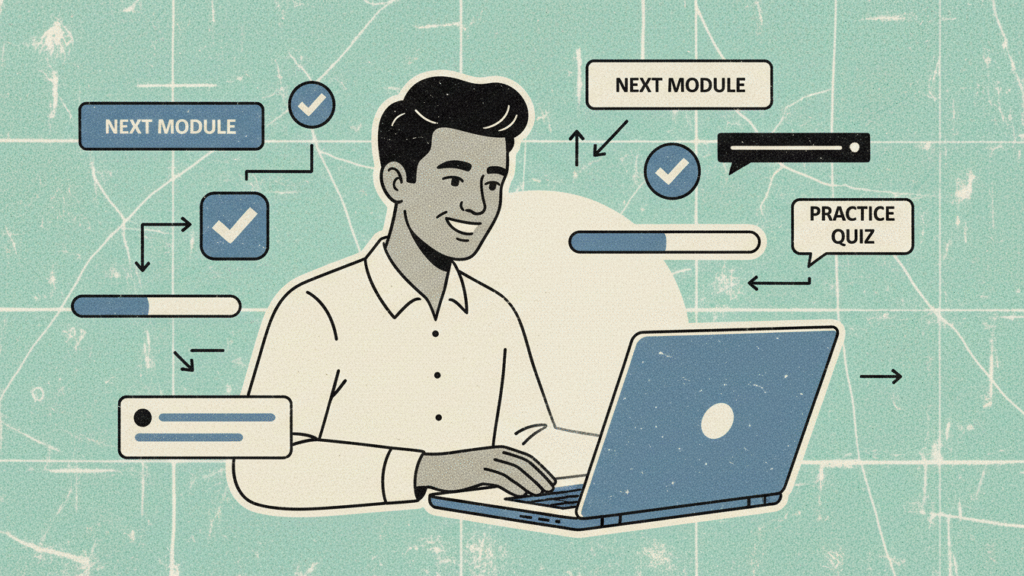
One of the most significant evolutions in educational content development is the shift from passive consumption to active learning. Interactive elements encourage learners to think, respond, and apply concepts. This leads to stronger engagement and better long-term retention.
Interactivity does not have to be complex or expensive. Simple techniques can make a major difference. Knowledge checks placed throughout the course help reinforce understanding. Click-to-reveal boxes break large amounts of information into manageable pieces. Drag-and-drop interactions are useful for sequencing or matching tasks. Branching scenarios allow learners to make decisions in context, mimicking real workplace situations.
These approaches are particularly effective in RTO training, vocational skills programs, and professional development because they connect learning to realistic tasks and challenges. Interactivity also supports self-paced learning, which is essential for adult learners who balance training with work and personal responsibilities.
Choose the Right Tools for Content Development
The tools you use can significantly influence the quality and usability of your learning content. Instructional designers often rely on authoring tools such as Articulate Storyline, Articulate Rise, or Adobe Captivate to build interactive modules. These tools integrate well with popular learning management systems and allow you to create responsive, mobile-friendly learning experiences.
For visual design, tools like Canva or Adobe Express help streamline the creation of diagrams, infographics, and layouts. AI tools such as ChatGPT can also assist with drafting explanations, outlining content, or simplifying complex concepts. However, while AI can support the process, human review is essential to ensure accuracy, context, and instructional quality.
The right toolset depends on your goals, your learners, and your organisation’s technology. Pop Education, for example, typically recommends lightweight, intuitive tools that support accessibility and mobile learning, especially for vocational training environments.
Quality Assurance and Review
Quality assurance is a critical part of educational content development, particularly in regulated environments. Before releasing learning materials, review them carefully for clarity, accuracy, accessibility, grammar, and consistent formatting. Check that all instructions are clear, that assessments align with learning outcomes, and that multimedia elements function correctly.
It is also important to consider accessibility. This includes alt text for images, readable font sizes, strong colour contrast, and captions for audio or video content. A well-tested course demonstrates professionalism and ensures learners can complete the material without confusion or barriers.
Testing your content with a small group of learners can be especially valuable. Their feedback highlights areas where the content may be unclear or too complex. This insight allows you to refine the training before launch, leading to smoother learner experiences.
Launch, Measure, and Improve
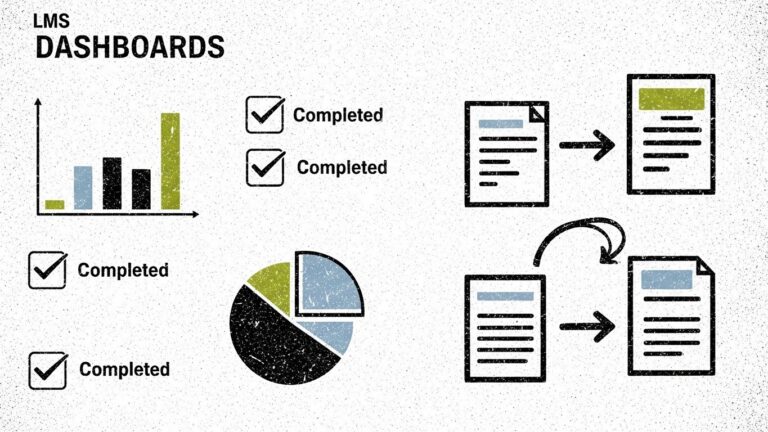
Launching your content is only the beginning. A good LMS provides data about learner behaviour, including completion rates, quiz performance, time spent on modules, and points where learners get stuck. This information helps you identify areas that need improvement.
Educational content development is an iterative process. As you gather data, you refine your content to improve clarity, remove unnecessary complexity, and strengthen areas where learners struggle. This continuous improvement approach ensures your training remains effective, relevant, and aligned with industry needs.
Common Questions About Educational Content Development
Many people new to instructional design or RTO training often ask how long a course should be, how interactive it needs to be, or how to make learning less overwhelming. Online discussions frequently highlight the same themes.
One common question is how to make learning more engaging. The answer is to break content into smaller sections, include real examples, and incorporate simple interactivity. Another question relates to course length. In most digital training environments, shorter is better. Modules structured in 5- to 10-minute sections lead to higher completion rates and better retention.
People also ask about the difference between educational content development and instructional design. Instructional design is the overall strategy, while content development focuses on producing the actual learning materials. Both roles work together to support the learner experience.
There is also growing curiosity about using AI. AI is useful for brainstorming, outlining, and simplifying explanations, but it should not replace the instructional designer. Human expertise ensures accuracy, nuance, and compliance.
Conclusion
Educational content development plays an essential role in creating learning experiences that are clear, engaging, and aligned with real-world needs. When you take time to understand your learners, define measurable outcomes, structure the content effectively, incorporate interactivity, choose the right tools, and review your materials thoroughly, the quality of your training improves dramatically.
In adult learning, vocational courses, and professional development settings, well-designed content supports learners in building confidence and applying new skills in their workplace. Whether you are developing material for an LMS, upgrading your RTO resources, or designing digital training for your organisation, the principles of strong educational content development provide a framework that leads to better learning outcomes and a more engaging learner experience.
FAQ
- What skills are essential for educational content development?
Key skills include writing, research, clear communication, understanding of adult learning principles, and basic design awareness. These skills help ensure the content isaccurate, engaging, and easy to follow. - How do I design effective content for an LMS?
Use short sections, clear headings, and practical examples. Ensure the content is mobile-friendly, well-structured, and includes opportunities for learners to check their understanding. - What makes vocational education content different from general e-learning?
Vocational content must be job-focused, practical, and aligned with training package requirements. It often relies heavily on scenarios, step-by-step processes, and real workplace examples. - How do I make my training more interactive without overwhelming learners?
Incorporate simple elements such as short quizzes, click-to-reveal boxes, or basic scenarios. Interactivity should support the learning, not distract from it. - How do I keep my training content up to date?
Regularly review your material using LMS data, learner feedback, and industry updates. This helps ensure your content staysaccurate, relevant, and compliant.
.