RTO Online Training: A Practical Compliance Checklist for ASQA Audits

Online delivery has become a defining feature of vocational education, and for many RTOs, it is now central to their training model rather than a supplementary option. But with this shift comes greater scrutiny: ASQA wants clear evidence that online training is equivalent in quality, structure, integrity, and outcomes to traditional, face-to-face instruction. The challenge is no longer whether RTOs can deliver courses online — the challenge is whether they can deliver them compliantly.
This article offers a deep, practical, and compliance-ready exploration of RTO online training, designed to help providers strengthen their systems, prepare for ASQA audits, and improve training quality. Drawing on industry standards, audit trends, and the realities faced by Australian training organisations, it explains not just what ASQA expects, but why those expectations exist and how RTOs can embed them meaningfully into their delivery model.
Why RTO Online Training Requires Stronger Compliance Systems
Online learning is convenient for students, efficient for RTOs, and scalable for operators — but it also exposes every weakness in an RTO’s training and assessment system. With classroom environments, trainers can directly observe engagement, identify gaps, and respond to learner needs in real time. Online platforms, however, make these processes dependent on structure, documentation, and digital systems. ASQA knows this, which is why online delivery receives intensive audit attention.
The regulator consistently examines whether the student experience online is equivalent to the experience promised in the TAS and whether the method of delivery still leads to valid, sufficient, authentic, and current evidence of competence. That means online training must be instructional, not passive; supportive, not isolated; and aligned with the training package, not merely uploaded content.
RTOs that succeed with online delivery are not simply digitising materials — they are redesigning training with intention, clarity, and compliance rigour.
Establishing a Clear Online Delivery Model
The foundation of compliant online training is a clearly articulated delivery model. Your Training and Assessment Strategy (TAS) must describe exactly how learning occurs in an online context: how students will interact with materials, how trainers will provide guidance, how assessments will be conducted, and how support systems will be maintained. A common audit issue occurs when the TAS promises a level of engagement that the RTO cannot actually demonstrate. For example, many RTOs state that trainers “regularly monitor student progress,” but there is no documented evidence of how or when this monitoring happens.
A strong online delivery model outlines the pedagogical approach being used — for instance, whether the program is self-paced, cohort-based, blended, or activity-driven — and explains why this approach is appropriate for the particular qualification. This clarification ensures that the delivery model is not only compliant but also coherent, defensible, and suited to learner needs.

Designing High-Quality Online Learning Materials
High-quality online materials go beyond a sequence of readings and quizzes. ASQA expects that online learning resources are structured, contextualised, engaging, and mapped directly to unit requirements. The key question ASQA asks is: Does this material actually prepare the learner for assessment and real-world application?
This is where many RTOs fall short. Some rely on generic e-learning packages that lack industry relevance. Others provide minimal content, expecting students to “research on their own.” A compliant online program is one in which every activity, reading, video, simulation, and case study contributes meaningfully to competence.
Well-designed materials integrate:
- workplace scenarios
- industry-relevant examples
- interactive learning activities
- structured guidance and prompts
- opportunities for feedback and reflection
- digital accessibility considerations
When an online course is built intentionally — with learning design, adult education principles, and assessment alignment in mind — it becomes significantly easier to defend during an ASQA audit.
Maintaining Assessment Integrity in the Online Environment
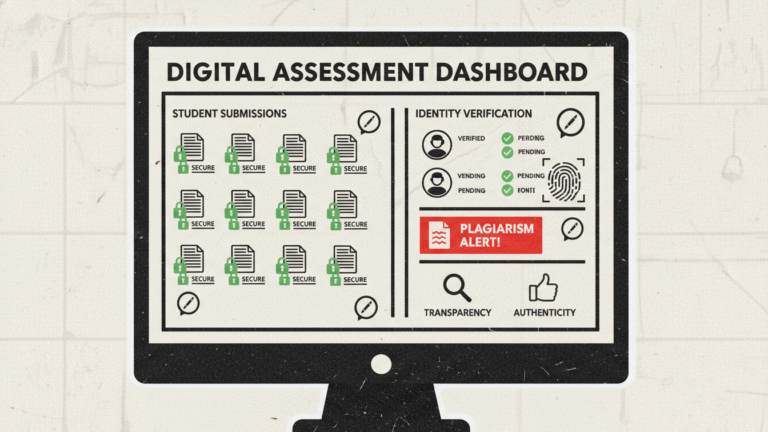
Assessment integrity is one of the most scrutinised areas of RTO online training. ASQA wants to see that the RTO has reliable processes for confirming student identity, ensuring authenticity, observing performance, and supporting valid assessment decisions.
The shift to online assessment means RTOs must rethink traditional processes. Written tasks must include measures that reduce plagiarism. Observations may need video submissions or live video assessments. Workplace evidence must be authenticated through supervisors or digital logs. Even simple knowledge assessments must show that the learner completed the work independently.
Authenticity is the key concern. Regulators want to see:
- how you verify that the right student is submitting work
- how you prevent collusion or copied responses
- how your platform preserves assessment security
- how practical skills are assessed remotely
- how assessors reach consistent decisions
The more transparent and traceable your assessment system is, the easier it becomes to demonstrate compliance.
Delivering Meaningful Learner Support
Online learners require stronger support than classroom learners — not less. ASQA emphasises student support because online environments can make it difficult for learners to ask questions, seek clarification, or stay motivated.
A compliant rto online training program includes structured support mechanisms such as scheduled trainer check-ins, progress monitoring, targeted reminders, and accessible communication channels. It also provides clear guidance on what students should do when they encounter difficulties, including academic challenges, technical issues, or personal barriers to progress.
The regulator expects evidence, not just intention. That means RTOs should maintain digital logs showing:
- trainer-student communication
- progress reviews
- assessment feedback
- responses to student queries
- intervention strategies
If you say a trainer is available for support, you must be able to show that meaningful support has actually occurred.
Ensuring Trainer Competency and Digital Capability
Trainer competency includes more than holding the right vocational and training/assessment qualifications. In the context of online delivery, trainers must also be able to facilitate digital learning, use the LMS competently, and deliver engaging online sessions.
RTOs should maintain evidence of professional development that demonstrates digital capability — such as training in online facilitation, e-learning design, remote assessment techniques, virtual classrooms, and LMS operation. Without this, an RTO may be deemed non-compliant because its staff are not adequately skilled to deliver online programs.
Trainer files should clearly show:
- vocational competency
- TAE competency
- industry currency
- online training PD
- online assessment PD
- participation in validation activities
ASQA is increasingly expecting trainers to demonstrate capability across all these areas, not just the traditional TAE requirements.
Creating a Strong Digital Evidence Trail
One of the advantages of online learning is the amount of digital evidence it generates — if the RTO captures it properly. LMS platforms can automatically record learner activity, assessment submissions, communication logs, time on task, feedback, and attendance in virtual sessions.
However, some RTOs fail to utilise this evidence effectively. They have the data, but they don’t present it in a way that supports compliance.
A strong digital evidence trail allows an auditor to trace a student’s entire learning journey from enrolment to completion, including how the RTO delivered the promised volume of learning, how the student engaged with training, how feedback was provided, and how competency decisions were made.
When your digital systems are organised, transparent, and consistent, they serve as the strongest defence in any ASQA audit.

Defending the Volume of Learning for Online Students
Volume of learning remains one of the most misunderstood elements of the Standards. RTOs must be able to justify how their online programs meet AQF expectations, including time spent in structured learning activities, assessments, supervised learning, and self-paced tasks.
Online delivery must still demonstrate:
- reasonable timeframes
- structured learning pathways
- opportunities for guided learning
- active trainer involvement
If a qualification typically requires 900 hours of learning, an online version requiring only 100 hours of activity will be flagged immediately. ASQA will want to see how the RTO established the volume of learning, why it is appropriate for the learner cohort, and how it is supported with real engagement.
Clear time allocations, learner analytics, and well-designed learning pathways make these justifications far easier.
Conducting Rigorous Validation of Online Assessments
Validation is essential for every RTO, but when assessments occur online, the process must be even more thorough. Validation should examine whether online tasks are clear, whether they produce quality evidence, whether they align with unit requirements, and whether authenticity measures are adequate.
RTOs should also review:
- clarity of instructions
- technological limitations
- accessibility issues
- sufficiency of digital evidence
- assessor decision-making
Strong validation processes reduce audit risks and strengthen training quality. They also demonstrate the RTO’s commitment to continuous improvement, which ASQA views favourably.
Communicating Policies Clearly to Online Learners
Every RTO must ensure that learners understand their rights and responsibilities. This includes policies on fees, refunds, complaints, appeals, academic integrity, and assessment conditions. Online learners often do not receive the same orientation that classroom learners do, which makes clarity essential.
Policies must be easy to access, easy to read, and written in language that students can understand — not dense regulatory jargon. Many student complaints arise because an RTO communicated poorly or inconsistently. Clear, accessible policies not only support compliance but also improve student satisfaction and reduce risk.
Conducting Internal Compliance Checks
A highly compliant RTO is one that audits itself before ASQA does. Internal reviews should examine:
- the TAS
- LMS activity
- training materials
- assessments
- trainer files
- student support evidence
- communication records
- validation outcomes
Internal audits help identify issues early, refine processes, and strengthen the organisation’s readiness for external review.
Pop Education frequently supports RTOs through detailed compliance reviews, rewriting TAS documents, strengthening online assessments, and redesigning programs to better reflect training package requirements. With the right guidance, online delivery becomes not only compliant but also sustainable and scalable.
Conclusion
RTO online training has enormous potential — but it must be delivered with structure, clarity, and compliance rigour. ASQA does not expect perfection, but it does expect consistency, transparency, and evidence-rich systems. When an RTO can show how it delivers quality online learning, supports students, maintains assessment integrity, and documents its practices, it places itself in the strongest possible position for an audit.
Online delivery is no longer a convenience or an add-on; it is a core part of modern vocational training. RTOs that embrace its potential — with the right compliance frameworks — will deliver stronger outcomes, support more learners, and stay ahead in an increasingly competitive VET landscape.
FAQs
- Can an RTO deliver a qualification 100% online?
Yes, as long as all training and assessment requirements can be met online. Some units may require workplace-based evidence or practical observations.
- What does ASQA check during online training audits?
ASQA reviews training quality, assessment integrity, mapping, volume of learning, trainer competency, student support systems, and digital evidence trails.
- How do RTOs ensure assessment authenticity online?
Through identity verification, supervisor reports, remote observations, plagiarism checks, structured questioning, and secure LMS systems.
- Do online learnersrequiremore support?
Usually, yes. Online learners benefit from structured trainer interaction, timely assistance, progress monitoring, and clear communication.
- What makes online training non-compliant?
Common issues include poor mapping, weak assessment integrity, inadequate support, inconsistent trainer involvement, insufficient volume of learning, and lack of evidence.